Category: Relationship

  • Situationship vs Relationship: How Do You Tell Them Apart?

    Situationship vs Relationship: How Do You Tell Them Apart?

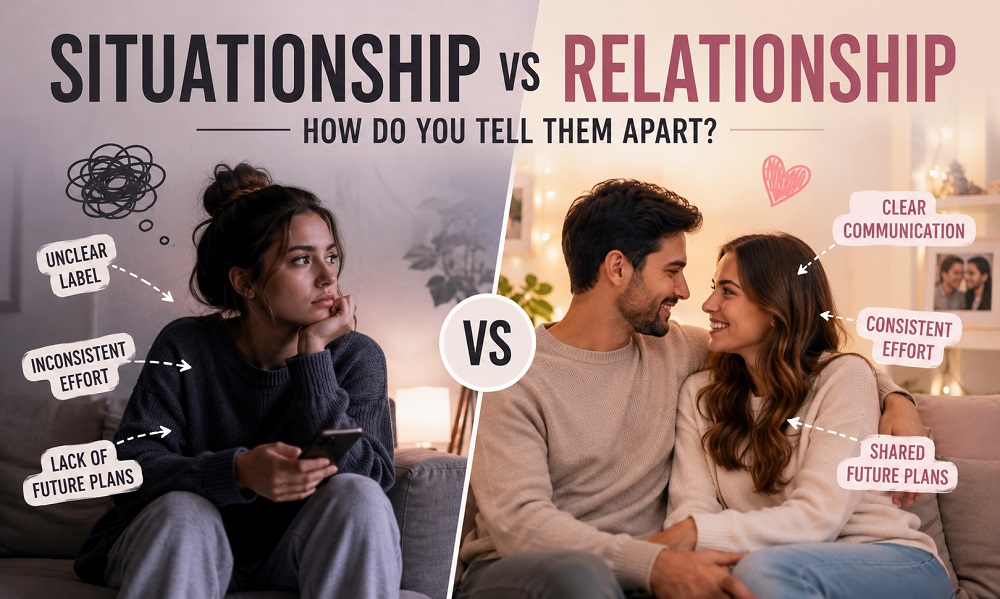
    The short answer: a relationship has defined expectations and a shared future both people agreed to. A situationship runs on undefined terms, no label, and often no real conversation about where it’s headed.

    That distinction sounds simple on paper. In real life, it’s messy. You can be texting someone every day, sleeping over, meeting for dinner twice a week, and still have no idea what you actually are to each other.

    That confusion isn’t an accident. It’s become common enough that dating apps and therapists alike now treat “situationship” as its own recognized category, not just a phase before something more serious.

    This guide breaks down what actually separates a situationship from a relationship, why the distinction matters more than people think, and how to figure out — honestly — which one you’re in.

    What Counts as a Situationship

    A situationship is a romantic or sexual connection that has relationship-like closeness without relationship-level commitment. There’s chemistry, consistency, maybe even exclusivity — but no agreed-upon label, no defined future, and often an unspoken rule not to ask too many questions.

    It’s not the same as casual dating. Casual dating usually involves seeing multiple people with low emotional investment. A situationship often feels emotionally serious, just structurally undefined.

    What Counts as an Actual Relationship

    A relationship is built on mutual, spoken agreement about what the connection is. Both people have said, out loud, some version of “we’re together.” That agreement usually comes with shared expectations: exclusivity (or an agreed alternative), some level of future planning, and accountability to each other.

    The key word is agreement. Not assumption. Not vibes. An actual conversation that both people can point back to.

    Why the Difference Actually Matters

    This isn’t just semantics. Research from Match’s Singles in America study has repeatedly found that a large share of single adults have been in a situationship, and many report it left them feeling more anxious than fulfilled compared to defined relationships.

    Undefined dynamics create what psychologists call ambiguous loss — grieving something you can’t clearly name because it was never clearly defined. You can’t fully move on from a situationship the way you would a breakup, because there was no formal “on” to begin with.

    Knowing which one you’re in affects real decisions: how much emotional energy to invest, whether to date other people, how to handle jealousy, and when to have the “what are we” conversation.

    Situationship vs Relationship: Side-by-Side Comparison

    Factor Situationship Relationship
    Label Undefined or avoided Explicitly agreed upon
    Future planning Rarely discussed Openly discussed
    Exclusivity Assumed, not confirmed Clearly stated
    Meeting friends/family Inconsistent or avoided Generally expected
    Conflict handling Often avoided to prevent “drama” Addressed directly
    Emotional security Lower, more anxiety-provoking Higher, more stable
    Public acknowledgment Rare (no social media, no introductions) Common


    The Real Benefits of Each Arrangement

    Situationships aren’t inherently bad, and relationships aren’t automatically healthier. Context matters.

    Situationships can work well when:

    • Both people genuinely want low commitment right now (post-breakup, early career, relocating soon).
    • There’s honest communication about the lack of labels, not just silence around it.
    • Neither person is quietly hoping the other will “come around.”

    Relationships tend to offer:

    • Predictability and emotional safety, which lowers anxiety over time.
    • A clearer framework for resolving conflict instead of avoiding it.
    • Shared accountability, which builds trust faster.

    Common Challenges People Run Into

    Mismatched Expectations

    The most common situationship problem: one person treats it casually while the other is quietly hoping it becomes a relationship. Without a conversation, both assumptions run in parallel, and someone eventually gets hurt.

    The Fear of “Ruining It” by Asking

    Many people avoid defining the relationship because they’re afraid the question itself will scare the other person off. Ironically, this avoidance is often what keeps things stuck in limbo indefinitely.

    Staying Too Long Out of Comfort

    Situationships can feel easier than relationships because they come with fewer obligations. That ease can become a trap — people stay in undefined dynamics for months or years simply because leaving feels harder than staying.

    Common Mistakes to Avoid

    • Assuming consistency equals commitment. Seeing someone regularly doesn’t mean you’ve agreed on what you are.
    • Waiting for the other person to bring it up first. Clarity requires initiation from someone — it rarely happens on its own.
    • Confusing comfort with compatibility. Familiarity can feel like connection even when the fundamentals don’t align.
    • Ignoring your own inconsistency. If you’re unclear about what you want, the other person can’t read your mind either.
    • Treating “the talk” as one conversation instead of an ongoing one. Expectations shift; revisiting them occasionally keeps things honest.

    How to Actually Define What You’re In

    • Ask directly: “What do you consider this to be?” Vague answers are answers too.
    • Pay attention to actions over time, not just words in the moment.
    • Notice whether future plans (weeks or months out) ever come up naturally.
    • Check whether you’re introduced to people in their life, not kept separate from it.
    • Trust the gap between what’s said and what’s done — that gap usually reveals the truth.

    Where This Is Heading: Future Trends in Modern Dating

    Dating research and app data suggest situationships aren’t fading — they’re becoming a recognized relationship stage of their own, especially among younger adults navigating longer timelines before marriage and cohabitation.

    At the same time, there’s a growing counter-trend: more people, especially those who’ve been burned by ambiguity, are actively prioritizing “clarity culture” — asking for defined terms earlier rather than letting things drift. Expect both trends to keep coexisting rather than one replacing the other.

    Conclusion

    A situationship and a relationship can look nearly identical from the outside — same texting patterns, same dates, same physical closeness. The real difference is whether both people have actually agreed on what it is.

    If you’re unsure which one you’re in, that uncertainty is itself useful information. Clarity doesn’t kill connection; it usually just reveals whether the connection was strong enough to survive an honest conversation.

    Frequently Asked Questions

    How do you know if you’re in a situationship or a relationship?

    The clearest sign is whether both people have explicitly agreed on labels, exclusivity, and some sense of a future together. If those things are only assumed, not discussed, it’s likely a situationship.

    Can a situationship turn into a relationship?

    Yes, but it usually requires a direct conversation rather than time alone. Situationships that shift into relationships almost always involve one person initiating “the talk” rather than the dynamic evolving on its own.

    Why do situationships feel more stressful than relationships?

    Undefined dynamics create uncertainty about where you stand, which research links to higher anxiety compared to clearly defined relationships. Not knowing the “status” makes it harder to plan emotionally or make decisions about the future.

    Is a situationship the same as friends with benefits?

    Not exactly. Friends with benefits usually implies low emotional investment by mutual understanding, while situationships often involve real emotional closeness without the label — which is part of why they’re more confusing.

    How long can a situationship last before it needs defining?

    There’s no fixed timeline, but if months pass without any conversation about what the connection is, that silence itself is usually a sign worth addressing directly rather than waiting out.


  • Unlocking Lovers’ Wisdom in Your Relationship

    Unlocking Lovers’ Wisdom in Your Relationship

    Lovers’ wisdom stands out as the quiet force that turns ordinary partnerships into lasting bonds. This wisdom blends deep understanding with everyday actions, helping couples navigate challenges without losing their connection. Relationships thrive when both partners commit to this approach early on.

    Building a Foundation of Trust

    Partners often face moments where doubt creeps in, testing the strength of their bond. True lovers’ wisdom shows up when you choose honesty over hiding feelings, even if it feels risky at first. You create safety by sharing thoughts openly, which builds a base that withstands storms.

    This practice goes beyond words. Actions like keeping promises, no matter how small, reinforce reliability. Over time, your partner starts to rely on this steadiness, much like Kolkata call girls know the value of consistent presence in building client trust. Trust grows stronger when you listen without jumping to defend yourself.

    In practice, set aside time each week to check in. Ask about their day, their worries, and their wins. This habit keeps misunderstandings small and turns potential conflicts into chances to connect deeper. Lovers’ wisdom here means prioritizing the relationship’s health over being right.

    Mastering Selfless Acts Daily

    Daily choices define how well lovers’ wisdom takes root in a partnership. You shift focus from what you gain to what your partner needs, creating balance naturally. Small gestures, like preparing their favorite meal after a long day, speak louder than grand promises. Selflessness avoids scorekeeping. When you help without expecting payback, the relationship flows smoother. Think of it as investing in a shared future where both feel valued. Even in busy lives, pausing to offer support changes the dynamic.

    One key step involves noticing their stress signals early. If they seem tired, suggest a walk together or handle a chore. This mirrors how Delhi call girls tune into subtle cues for better interactions. Lovers’ wisdom shines when you act from care, not obligation. Reinforce this by reflecting together at day’s end. Share one thing each did for the other. These moments remind you both of the wisdom guiding your love, keeping it fresh and alive.

    Communicating with Gentle Clarity

    Words carry power in any relationship, and lovers’ wisdom guides how you use them. You express needs directly but kindly, avoiding blame that shuts down talks. Clear communication prevents small issues from growing into walls. Start by pausing before responding in heated moments. Breathe, then restate what you heard to show understanding. This technique diffuses tension and invites your partner to open up. Lovers’ wisdom lies in choosing words that heal rather than wound.

    Article image

    Practice active listening daily. Put away distractions and face each other fully. Nod, ask follow-ups, and resist planning your reply. Over weeks, this builds a habit where both feel truly seen. Challenges arise, yet lovers’ wisdom prevails through patience. When arguments heat up, suggest a break to cool off, then return calmer. Like Jammu call girls who read the room for smooth encounters, you learn your partner’s rhythm. End conversations on a positive note to carry forward the connection.

    Embracing Growth Together

    Relationships evolve as people change, and lovers’ wisdom adapts to those shifts. You encourage each other’s goals, celebrating progress without jealousy. This support turns individual paths into a joint journey. Growth starts with curiosity about one another’s dreams. Discuss aspirations over coffee, then brainstorm ways to help. Attend their events or share resources that fit their pursuits. Your involvement shows commitment beyond comfort zones.

    Face setbacks as a team. When one stumbles, offer encouragement drawn from shared experiences. Lovers’ wisdom means lifting each other without taking over. Track milestones together to mark how far you’ve come. Introduce variety to keep things vibrant. Try new hobbies side by side, like cooking classes or weekend hikes. These shared adventures deepen bonds and spark fresh appreciation. Lovers’ wisdom ensures growth strengthens, rather than strains, your partnership.

    Handling Conflicts with Grace

    Conflicts test every couple, yet lovers’ wisdom turns them into opportunities. You approach disagreements with calm, focusing on solutions over winning. This mindset keeps respect intact even in tough talks. Identify triggers early to stay ahead. Notice patterns, like fatigue sparking arguments, and address them proactively. Suggest timeouts if emotions rise, returning when level-headed. Lovers’ wisdom prioritizes harmony.

    Own your part without excuses. Say what you feel and need, using “I” statements to avoid attacks. Listen to their side fully before sharing yours. This exchange builds empathy and mutual respect. Resolve by agreeing on next steps together. Follow through to show reliability. In time, conflicts become shorter and less frequent. Lovers’ wisdom, applied here, fortifies your bond against future storms.

    Nurturing Intimacy Beyond Physical

    Intimacy thrives on emotional closeness, where lovers’ wisdom fosters vulnerability. You share fears and joys openly, creating a safe space for authenticity. This depth sustains passion long-term. Build it through daily rituals, like evening debriefs or surprise notes. Touch base on feelings without judgment. Physical closeness follows naturally from this trust.

    Explore each other’s worlds deeper. Read the same book or watch thought-provoking films, then discuss. These activities reveal layers and spark meaningful dialogues. Keep romance alive with spontaneity. Plan date nights that mix fun and reflection. Lovers’ wisdom balances independence with togetherness, ensuring intimacy feels renewing.

    Cultivating Lasting Appreciation

    Gratitude anchors lovers’ wisdom, reminding you of your partner’s worth. You voice thanks often, highlighting specific efforts. This habit counters complacency. Make it routine. Note three things daily that you value about them. Share openly to amplify the effect. Over months, appreciation becomes your relationship’s core.

    Celebrate anniversaries of small wins too, like overcoming a challenge together. These markers reinforce progress. Lovers’ wisdom circles back to trust and selflessness introduced early. Practice these daily, and your bond endures. Understand appreciation’s role in repeat connections. Your relationship gains that same enduring strength.

  • Dating After a Long Break: A Gentle Roadmap Back In

    Dating After a Long Break: A Gentle Roadmap Back In

    Whether you’re leaving a long relationship or simply stepping out of a quiet stretch, getting back out there can feel daunting. It doesn’t have to be a leap. It can be a series of small, steady steps.

    QUICK ANSWER

    Start by checking your motivation — date because you feel ready, not to fill a void. Then reconnect with your own interests, set honest expectations, and go slowly. There’s no “correct” timeline. Treat early dates as low-pressure practice at being open again, and lean on friends for support and introductions.

    How do you know you’re ready?

    Readiness is less about a calendar and more about your reasons. Ask yourself, with curiosity rather than judgment, why you want to date now.

    A useful signal: you can picture dating with a positive, open outlook rather than as a way to escape loneliness or distract yourself from grief. Dating mainly to fill a void tends to lead to disappointment — and can unintentionally hurt the other person.

    It also helps to have made some peace with what ended before. You don’t need to have it all figured out. You just need to be open to learning what worked for you, what you’d avoid, and what you actually want next.

    A four-phase way back

    Phase 1 — Reconnect with yourself

    Before you meet anyone new, get reacquainted with you. After a long relationship, identities blur, and it’s common to feel a little lost. Take yourself to a film. Revisit a hobby you dropped. Try one new thing. This rebuilds the confidence that makes dating easier — and clarifies the kind of person who’d actually fit your life.

    Phase 2 — Set honest expectations

    Decide what you’re looking for, even loosely. A few casual dates to find your feet? Or a real partnership? Both are fine. Naming it keeps you from drifting into something that doesn’t suit you, and from reading too much into a single evening. A first date is a beginning, not a verdict.

    Phase 3 — Dip a toe in

    Start small and social. Friends are your best on-ramp — for support, perspective, and introductions. Evening classes, clubs, gyms, and interest groups put you around people without the spotlight of a formal date. When you do use apps, expect the landscape to have shifted while you were away, and treat the first few conversations as practice.

    Phase 4 — Date with openness

    Nerves are normal. Rejection isn’t personal — it’s the cost of being brave enough to try. Approach each date with curiosity instead of pressure to find “the one” immediately. A simple habit helps: look for green flags, not just red ones. Try to notice five genuinely good things about the person in front of you, even if it ultimately isn’t a match.

    Do’s and don’ts for the first dates

    Do Don’t
    Pace yourself and keep early dates light and simple. Rush to make up for lost time or force a relationship.
    Listen closely, ask follow-up questions, make eye contact. Spend the date talking about your ex.
    Be honest about who you are and what you want. Pretend to be set up for something you’re not ready for.
    Stay flexible and open to new experiences. Be so set in your ways that there’s no room for another person.
    Give yourself credit just for showing up. Treat one bad date as proof it won’t work.

    What’s changed about dating while you were away?

    The honest framing many guides skip

    Coming back after a breakup, you’re “supposed to” feel a bit sensitive, nostalgic, and guarded at first — that’s normal, not a flaw to fix before you start.

    Slowing down is often the bravest move, not a sign you’re behind. You set the pace.

    Dating apps and norms may have shifted, but the fundamentals haven’t: showing up honestly and grounded matters more than any technique.

    If a breakup or loss still feels heavy, there’s no shame in talking it through with a counselor before — or while — you date again.

    Frequently asked questions

    Is there an ideal amount of time to wait?

    No fixed rule fits everyone. Some people want space to grieve and reset before reconnecting; others feel ready sooner. The healthier guide is your motivation and outlook, not a number of weeks or months.

    What if I feel anxious before every date?

    That’s extremely common, especially early on. A positive mindset helps — instead of focusing on what you fear, remind yourself of the parts of you that you’re proud of. Anxiety tends to ease with practice.

    Do dates have to lead somewhere serious?

    Not at all. It’s perfectly acceptable to date for fun and connection, as long as everyone involved understands the situation.